
Overview
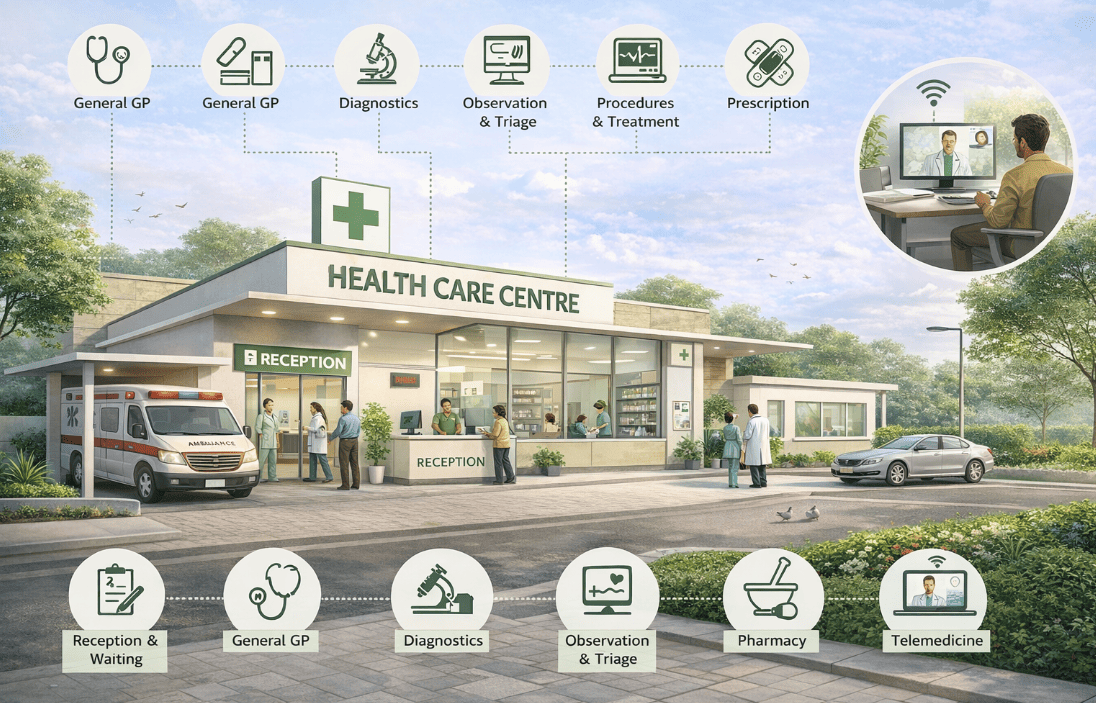
A well-designed Health Care Centre delivers timely, safe and patient-centred medical services to its community. Whether a small primary-care clinic, urgent care hub or neighbourhood wellness centre, the facility should prioritise clinical quality, infection control, accessibility and a calm patient experience. A compact, efficient layout that supports smooth workflows and rapid triage improves outcomes and reduces waiting times.
Core Services
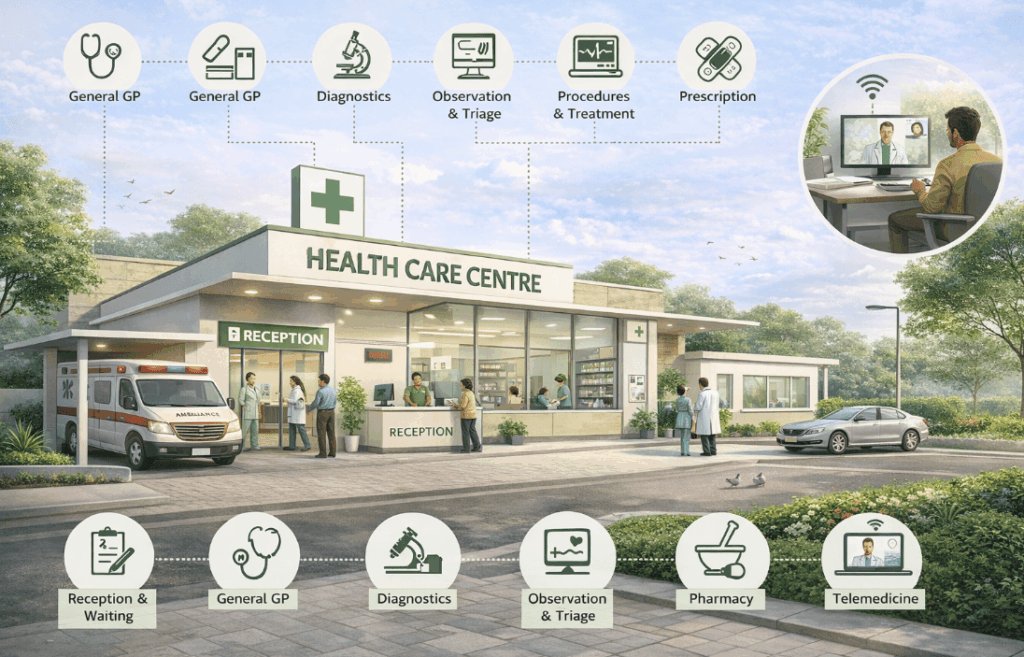
- Primary medical consultations (general physician / family medicine)
- Basic diagnostics (point-of-care blood tests, glucometer, urine analysis)
- Minor procedures and wound care (suturing, dressings)
- Maternal & child health checks / immunisations
- Basic emergency stabilisation and triage (oxygen, basic life support)
- Chronic disease follow-up (diabetes, hypertension) and medication refills
- Pharmacy or medicine dispensing for common drugs
- Preventive care and screening (BP, BMI, health education)
- Telemedicine / virtual consultations for follow-up and specialist referrals
Facility Components & Layout
- Reception & waiting area — comfortable seating, clear signage, separate arrival/triage desk.
- Triage / rapid assessment bay — near entrance for quick sorting of urgent cases.
- Consultation rooms — private, sound-treated, with handwashing access and space for minor procedures.
- Treatment/procedure room — fitted for minor operations, emergency stabilisation, and wound care.
- Diagnostics corner — point-of-care testing devices and secure sample storage.
- Pharmacy / dispensing counter — secure, temperature-controlled storage for medicines.
- Observation area — 1–4 recliner chairs/beds for short monitoring after procedures.
- Staff room & on-call amenities — rest, changing area, PPE storage.
- Clean utility & dirty utility rooms — for sterile supplies and waste segregation.
- Accessible toilet & patient wash area — comply with universal design standards.
- Storage room — consumables, linens, emergency kits.
- Records & admin area — secure health records (electronic or paper) and billing.
- Parking & ambulance access — clear, level approach and covered drop-off if possible.walks and jogging.
Essential Equipment & Supplies
- Basic emergency kit: oxygen cylinder or concentrator, bag-valve mask, nebuliser, suction device
- Point-of-care test devices: glucometer, hemoglobinometer, rapid antigen / pregnancy tests, urine analyzer
- ECG (optional for urgent-care centres) and automated BP monitors
- Minor procedure set: sterile packs, suture kits, local anaesthetics
- Refrigerator for vaccines/temperature-sensitive medicines with alarmed thermometer
- PPE: gloves, masks, gowns, eye protection and hand sanitiser stations
- Waste segregation bins and sharps containers (clearly labelled)
- Computer/tablet for electronic health records (EHR) and telemedicine
I