

Overview
A reliable well or borewell connectivity system provides communities and homes with an independent, resilient source of water. Properly designed and maintained, a well-based water supply delivers potable water for domestic use, a steady supply for landscaping and irrigation, and an emergency backup when municipal supply is interrupted. The system is most effective when combined with filtration/treatment, adequate storage, and smart controls to ensure safe, continuous service.
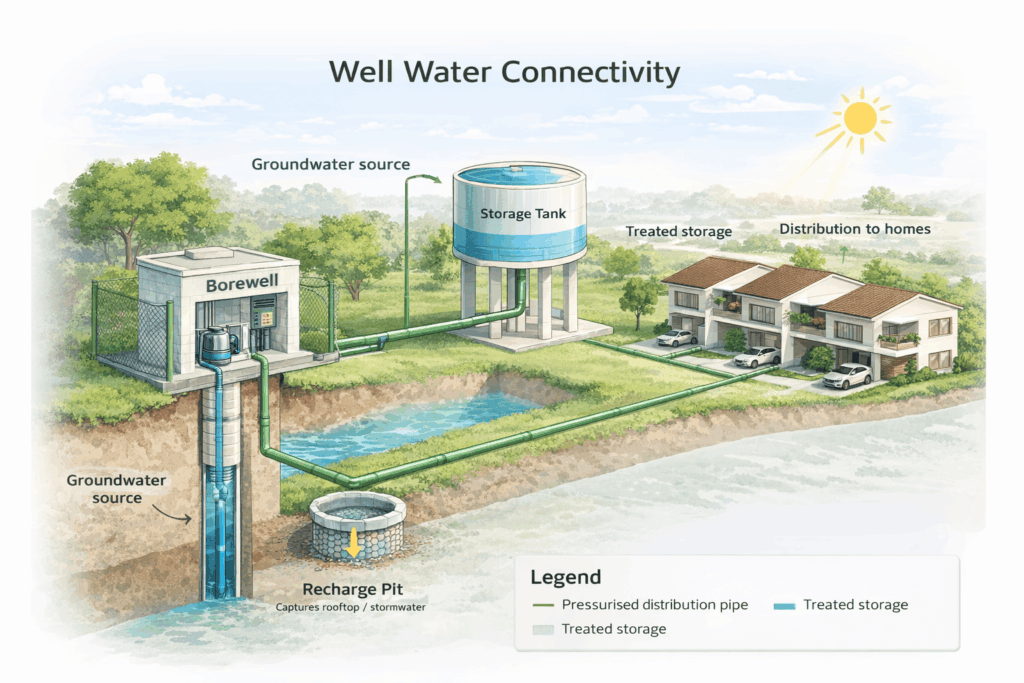
Features & specifications
- Greater water security and independence from intermittent municipal supply.
- Cost-effective long-term supply for irrigation, landscaping and non-potable uses.
- Improved landscaping and microclimate control (sustains trees and green pockets).
- Emergency water availability for residents during outages.
- Opportunity for sustainable combinations (recharge pits, treated rainwater, solar pumping).
Design & layout
- Water quality: design the treatment train to meet potable water standards for drinking and household use (appropriate sediment removal, disinfection and regular testing).
- Storage sizing: balance overnight and daily demand with buffer capacity—separate tanks for potable and non-potable uses helps prioritise supply.
- Pump selection: choose pumps sized for required flow and head, include soft-start or VFD for energy efficiency and longer equipment life.
- Redundancy: consider dual pumps or emergency backup (generator/solar) where uninterrupted supply is critical.
- Distribution: plan looped distribution lines, pressure zones, and accessible isolation points for easier servicing and minimal disruption during repairs.
Maintenance & operations (recommended routine)
- Monthly: visual checks for leaks, pump operation, tank levels and automatic control functioning.
- Quarterly: basic water-quality testing (turbidity, chlorine residual if used), filter backwash or replacement as needed.
- Biannual: full system inspection—pump performance, electrical wiring, control panels and valves.
- Annual: comprehensive water quality test (microbiological and chemical) and professional servicing of pumps and tanks.
- Keep a log of tests, maintenance, and service visits for regulatory compliance and resident transparency. based on community schedule and events.